📉 Watch: The #1 Recession Indicator Explained
Everyone on Wall Street is celebrating the elusive “Soft Landing,” but the bond market is screaming a warning signal that has successfully predicted every single recession for the last 50 years: The Yield Curve Inversion.
While retail stock market investors are chasing all-time highs and buying into the AI hype, smart money investors are looking at the bond market with extreme caution. Even seasonal trends like the Santa Claus Rally can be disrupted by these macro-economic signals.
If you don’t understand what the Yield Curve Inversion is telling us right now, you might be walking blindly into a financial trap. Here is the brutal truth about the “Lag Effect” and why the recession might not be canceled after all.
What Is a Yield Curve Inversion?
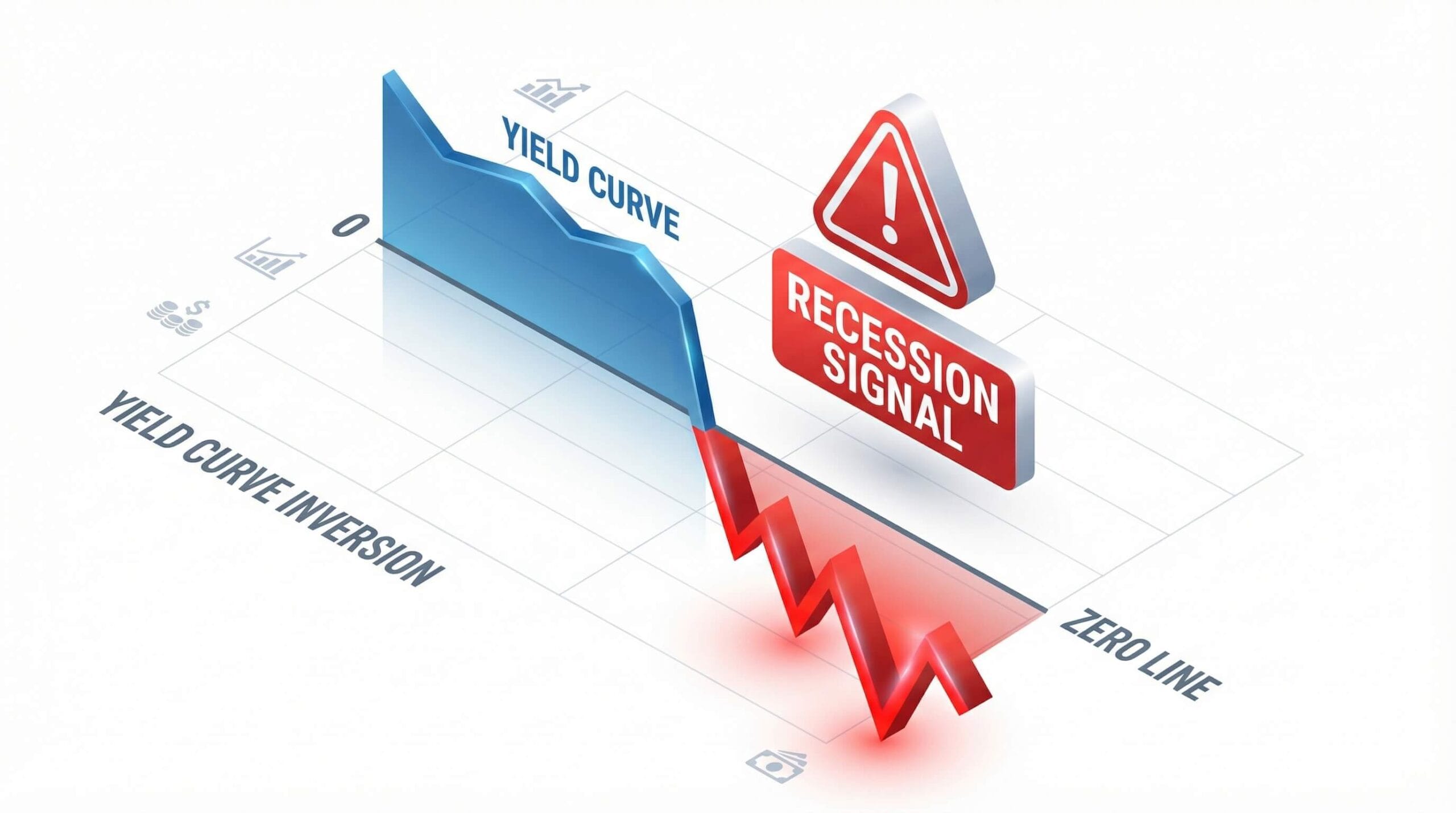
To understand the inversion, you first need to understand the “normal” bond market. Under healthy economic conditions, if you lock your money away for 10 years (buying a 10-Year Treasury Bond), you should get paid a higher interest rate than if you lock it away for only 2 years (buying a 2-Year Treasury Bond).
This makes intuitive sense: More Time = More Risk = Higher Reward.
A Yield Curve Inversion happens when this fundamental logic breaks. It occurs when short-term bonds pay higher yields than long-term bonds. As you can see in the chart above, the line dips below zero.
Why does this happen? According to Investopedia, it signals that investors have no confidence in the near-term economy. They rush to buy long-term bonds for safety, driving those yields down, while selling short-term assets.
Why It Predicts Recessions (The “Lag Effect”)
The most dangerous misconception about the economy is that interest rate hikes work instantly. They do not. Monetary policy operates with what economists call a “Long and Variable Lag.”
When the Federal Reserve raises rates (as they did aggressively recently), it takes 12 to 18 months for the full pain to hit the system. Businesses don’t go bankrupt the day rates go up; they go bankrupt 18 months later when they try to refinance their debt and realize they can’t afford the new rates.
The Yield Curve Inversion is essentially the market pricing in this future pain before it hits the headlines.
The “Soft Landing” Trap Explained
You will hear pundits on TV say, “The Yield Curve Inversion doesn’t matter this time because the labor market is strong.” This is a classic trap known as “Recency Bias.”
History says they are wrong. In 2000 (just before the Dot Com Bubble burst) and in 2007 (just before the Great Financial Crisis), the exact same narrative played out. The curve inverted, experts claimed “this time is different,” and then the market crashed spectacularly.
The Yield Curve Inversion has a near-perfect track record since 1955. Betting against it is effectively betting that 70 years of economic history is wrong.
The “Un-inversion”: When the Crash Actually Happens
Here is the nuance most retail investors miss, and it is critical for your timing.
The stock market crash usually doesn’t happen while the curve is deeply inverted. It happens right after it “un-inverts” (or steepens). Look closely at the chart image above—the grey shaded areas (recessions) almost always start after the line shoots back up.
Why? Because the curve un-inverts when the Federal Reserve panics. They see the economy collapsing, so they aggressively cut short-term interest rates. By the time they do this, the damage is already done.
Action Plan: How to Protect Your Portfolio
If the Yield Curve Inversion signal is correct, we could see significant volatility in the next 6-12 months. This is not the time to be “all in” on risky, speculative assets without a hedge.
3 Steps to Prepare:
- Watch the 2-Year vs. 10-Year Spread: You don’t need a Bloomberg terminal. You can track this chart for free on TradingView. Watch for the moment it crosses back above zero.
- Diversify Your Holdings: Ensure you aren’t 100% exposed to equities. Apply the 2% Risk Rule to manage your exposure.
- Hold Cash (Liquidity): Having cash allows you to buy quality assets at a discount if a market correction occurs.
Yield Curve Inversion FAQs
What does an inverted yield curve mean?
An inverted yield curve means that short-term interest rates (like the 2-year Treasury) are paying more than long-term rates (like the 10-year Treasury). This signals that investors expect the economy to slow down or crash in the future.
Does the yield curve inversion always predict a recession?
Historically, yes. The Yield Curve Inversion has successfully predicted every recession in the U.S. since 1955, typically with a lead time of 6 to 18 months.
💡 Next Step: If you are holding cash to wait for a crash, inflation might be eating your buying power. Check out our guide on the Real Yield Trap to see if your “safe” savings account is actually losing money.
🚀 The “Smart Money” Toolkit
The exact tools we use to analyze markets, trade assets, and protect wealth.